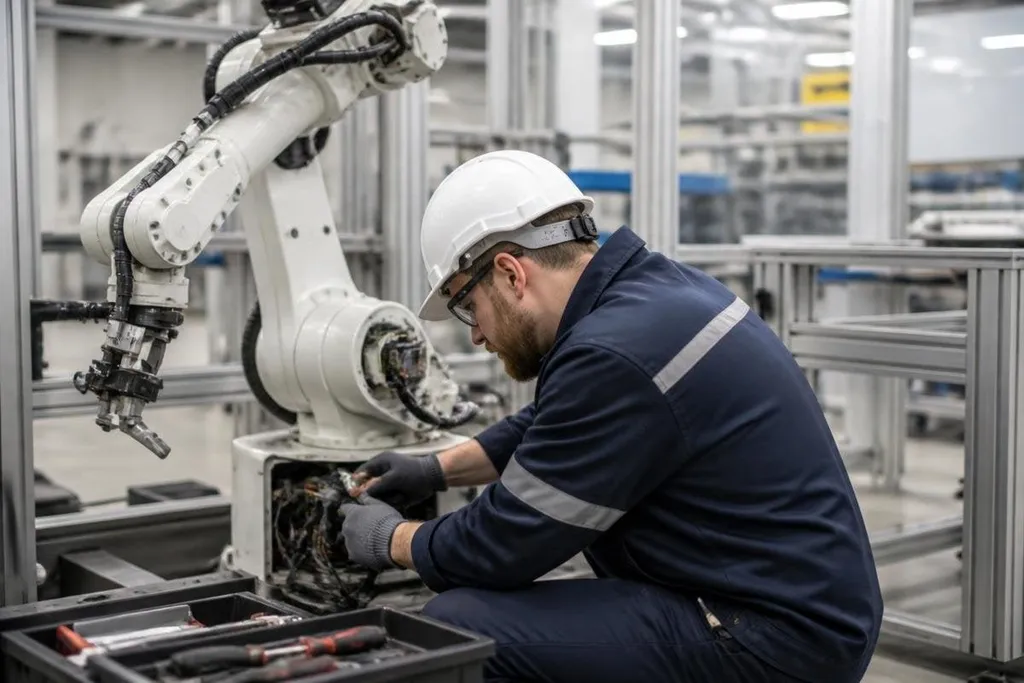
A robot that stops working can hold up a whole production cell, packing line, or inspection station. That makes the technician who can find the fault, fix the hardware, and return the robot to service a practical part of any automation plan.
- Robot technicians work across hardware, software, and safety systems.
- The job needs fault-finding skills, not only robot programming.
- A useful training path starts with electrical basics and grows from there.
What robot technicians do
A robot technician keeps an automated system working during daily use. Their tasks can include fitting a robot, checking cables, changing a motor, setting sensor positions, and testing the safety circuit before the cell runs again.
Tasks change with the robot. An arm on a factory line may need joint checks and tool calibration. A mobile robot may need help with drive motors, battery faults, network links, or mapping data. The technician has to read the signs from the whole system instead of treating every fault as a software problem.
That system view matters because one fault can have several causes. A gripper that drops a part might have a damaged seal, a loose cable, a bad pressure reading, or a program setting that sends too little force. The technician checks each point in a sensible order and records what fixed the fault.
Why automation creates this work
Automation adds machines that need setup, inspection, repair, and safe changes. Each new robot also brings service work around it: fixtures need adjustment, spare parts need storage, and production staff need a clear way to report faults.
This is where demand for robot technicians can grow. A company may buy a robot from one supplier, use a vision camera from another, and connect both to a control system built by a third team. Someone still has to make those parts work together on the factory floor.
The job also continues after installation. Dust, vibration, heat, and repeated motion can change how a machine behaves. Regular checks can find a worn cable or loose fastener before it stops a line, though the exact checks depend on the robot and the site.
The machines behind those repairs set the skills a technician needs. Robot 24 covers the companies and robots involved, giving you context for the daily tasks and skills that come next.
Skills and daily work
Robot technicians sit between electrical work, mechanical repair, and control software. They don't need to write every program from scratch, but they do need to read a fault message, trace a signal, and understand what the code asks the hardware to do.
A useful skill set includes:
- Electrical checks: read wiring diagrams, test voltage, and find broken connections.
- Mechanical repair: inspect joints, belts, bearings, tool mounts, and fasteners.
- Robot setup: set the robot's position, tool data, and work area with care.
- Control systems: read alarms and follow signals through the controller and sensors.
- Safety work: test emergency stops, guards, light curtains, and restart steps.
Training on one robot brand can help someone start, but the basic skills travel better. A technician who understands current, torque, sensor signals, and safe isolation can learn a new robot model with less trouble.
Daily work is hands-on, but it also involves records. A technician may need to write down the fault, the failed part, the test result, and the time the robot returned to service. Good records help the next person avoid repeating the same checks.
The schedule can follow the machine rather than a normal office day. A repair may happen during planned maintenance, during a production stop, or after a safety alarm. The person doing the work needs patience because the first alarm is often a clue, not the cause.
I'd choose this path for someone who likes finding faults in physical systems and can stay calm when a machine stops. I'd skip it for anyone who wants a job made up only of screen work.
A practical starting checklist
Before choosing a course or applying for a role, check these points:
- Find out which robot brands local companies use.
- Learn electrical safety and lockout procedures first.
- Practice with sensors, motors, relays, and basic controllers.
- Read robot manuals and wiring diagrams, not only video lessons.
- Ask if the training includes a working robot and fault tests.
- Check whether the role includes shifts, travel, or on-call repair.
The next step is to match training to the machines near you. If local factories use six-axis arms, study robot joints and tool setup. If they use mobile robots, add drive systems, batteries, and wireless networks.
Those tasks will change with the machines, but every robot still needs someone who can find the failed part and make the next safe move.